
Concrete Foundations & Slabs
At Platinum Paving and Concrete, our crews build concrete slabs and foundations to support warehouses, distribution centers, office buildings, and industrial facilities. From reinforced footings to large structural slabs, every project begins with careful planning, proper subgrade preparation, and the right materials to ensure long-term performance.
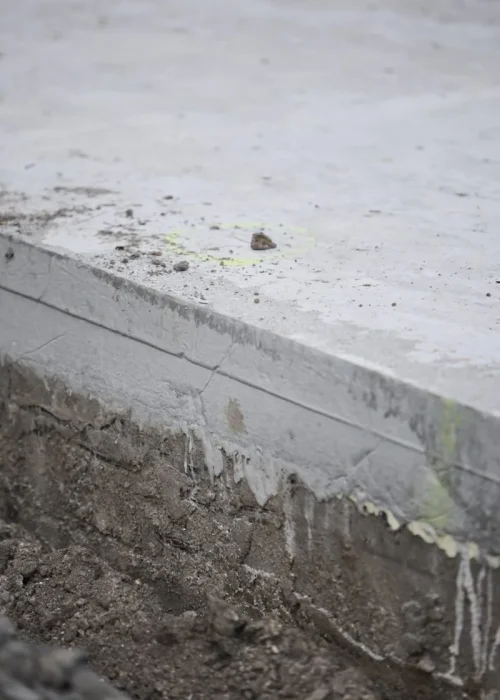
Concrete Foundation & Floor Slab Services
At Platinum Paving and Concrete, we work closely with trusted material suppliers, including Platinum Materials and other regional partners, to make sure every concrete slab project starts with the right materials. Planning early with suppliers helps meet job needs and keeps projects on schedule.
Our team has the experience to get the job done right. With proper planning and skilled crews, each step stays on track. We focus on building strong foundations that last.
Common concrete foundation and slab applications include:
- Reinforced footings that spread building weight into the ground
- Stem walls for strong perimeter support and proper elevation
- Slabs for offices, retail spaces, and industrial buildings
- Warehouse floors built to handle forklifts and heavy equipment
- Equipment pads for generators and machinery
What Is a Concrete Slab Foundation?
A concrete slab foundation serves as the base platform for a building, supporting everything above it. Instead of using a crawlspace or basement, the structure sits directly on a thick concrete surface poured over prepared soil or a compacted base. The slab spreads the building’s weight evenly across the ground, creating a stable starting point for the entire structure.
Before the concrete is poured, reinforcement such as steel rebar or wire mesh is placed inside the slab. These materials strengthen the concrete and help control cracking caused by temperature changes or natural ground movement.
Concrete slab foundations are widely used in commercial construction due to advantages like:
- Faster construction than deeper foundation systems
- Reduced excavation requirements during site preparation
- Reliable structural support for large buildings and heavy operational loads
Proper site preparation is critical. The soil beneath the slab must be graded, compacted, and stabilized to keep the foundation level and supported over time. When done right, concrete slabs provide a durable base you can count on for decades.
Common Types of Concrete Slab Foundations
Every construction site presents its own challenges. Everything from soil stability to environmental conditions influences how a foundation should be designed. Our team carefully evaluates site conditions before selecting the slab foundation system that will best support your needs.
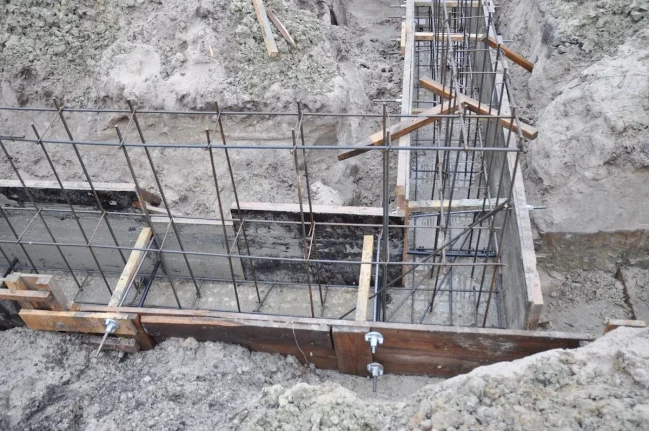
T-Shaped Slab Foundation
T-shaped slab foundations are commonly used in areas with freezing temperatures. The “T” shape comes from reinforced footings placed deep in the ground to provide stability and prevent frost from shifting the foundation. Once the footings are set, the concrete slab is poured on top. This design helps prevent cracking and settling caused by frost heave.
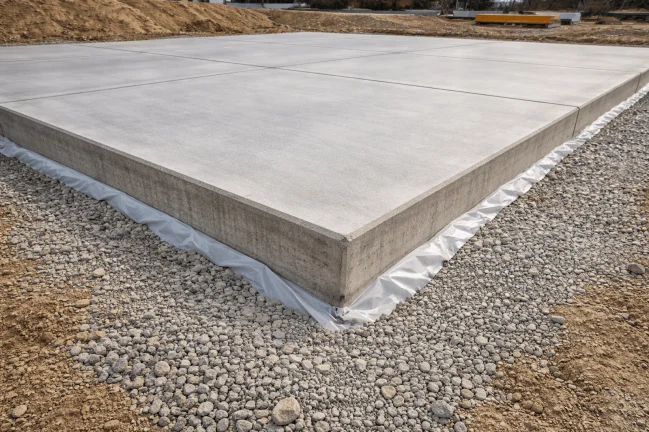
Floating Slab Foundation
A floating slab is not anchored into the ground and instead “floats” on the soil beneath it. This type of foundation is often used for garages, sheds, and other non-living spaces. It works well for structures that don’t need the same level of support as a home but still require a solid concrete base.
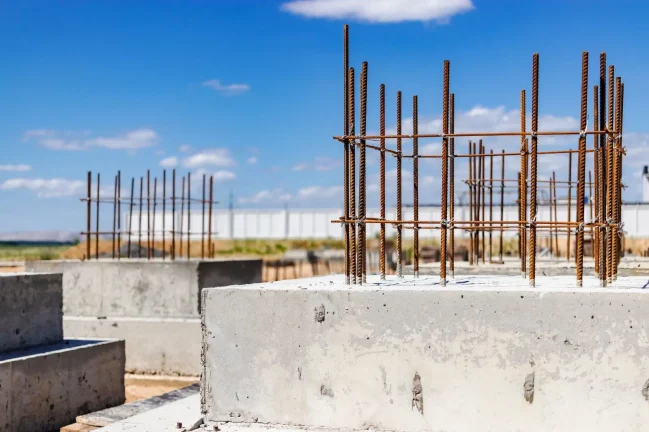
Monolithic Slab Foundation
Also called a slab-on-grade foundation, a monolithic slab is poured all at once. It includes the footing, slab, and perimeter in one continuous pour. This type is popular for residential homes because it is cost-effective and quick to install. However, it may be more prone to shifting in areas with poor soil or extreme weather.
Stem Wall Slab Foundation
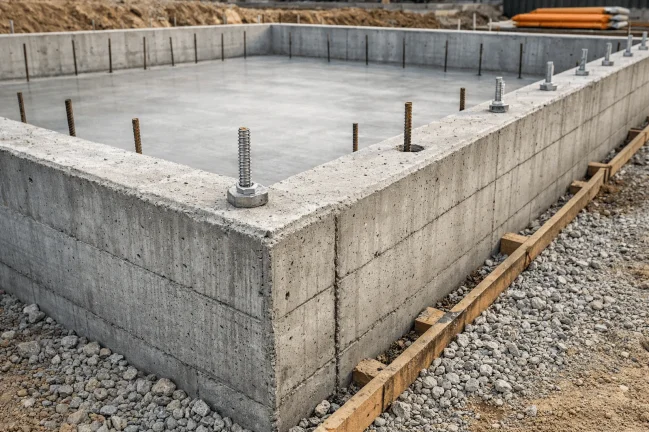
A stem wall slab foundation uses a concrete perimeter wall with the slab poured inside, lifting the structure slightly above the surrounding ground. This added elevation improves stability and helps manage moisture, making it a reliable option in poor soil conditions. It’s commonly used in commercial projects where consistent load distribution is critical.
Post-Tension Slab Foundation
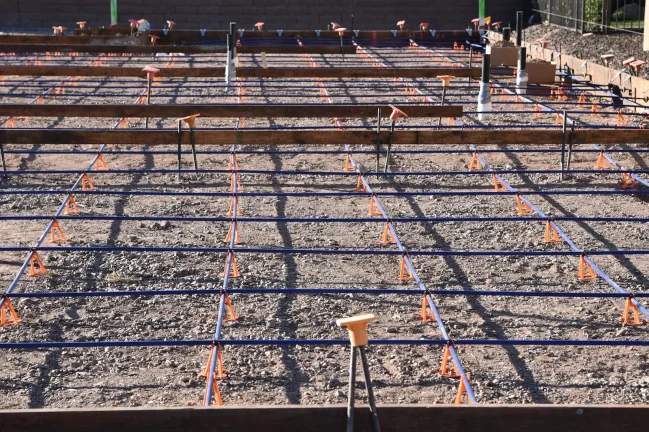
This type of slab uses steel cables (post-tension tendons) that are tightened after the concrete cures. These cables add strength and help reduce cracking and shifting, especially in areas with unstable soil. Post-tension slabs are common in modern construction and work well where soil movement is a concern.
We Help You Choose the Right Concrete Foundation
No two construction sites are the same. At Platinum Paving and Concrete, our team is here to help you determine which concrete foundation is best for your commercial property based on soil conditions, structural loads, and project timelines.
What Is a Concrete Floor Slab?
Think of a concrete floor slab as the platform that everything inside a commercial building runs on. From forklifts to daily operations, it supports the activity that keeps the space working. These slabs are reinforced with steel rebar or wire mesh and poured over a prepared base or structural framing, depending on the design.
Because they handle heavy loads and constant use, floor slabs are engineered for strength, durability, and long-term performance, creating a level surface that supports ongoing operations across commercial and industrial spaces.
What Are They Used For?
Concrete floor slabs are used in a wide range of commercial applications, including:
- Warehouse floors designed to support forklifts and pallet storage systems
- Distribution center slabs built for continuous equipment traffic
- Industrial facility floors that handle machinery and heavy loads
- Equipment pads and service areas supporting generators, compressors, and mechanical systems
- Concrete walkways and utility pads are used throughout commercial sites
When properly designed and installed, these slabs provide durable surfaces that support daily operations across commercial and industrial environments.
Why Choose Platinum Paving and Concrete?
Before walls go up or equipment moves in, the foundation has to be right. Concrete foundations and floor slabs support the entire structure and the daily activity inside it. At Platinum Paving and Concrete, our crews work alongside contractors and developers to build reliable concrete foundations with the planning and precision commercial projects demand.
No matter the project we take on, Team Platinum is proud to provide:
Decades of Experience
Our team brings decades of combined experience in commercial paving and concrete construction. From ADA ramps and equipment pads to large structural slabs, our crews have completed a wide range of demanding commercial projects.
Advanced Equipment
Precision matters in concrete work. Our crews use specialized equipment such as slipform curb machines and laser screeds to place and finish concrete accurately across large project areas.
Fast and Efficient Execution
Construction schedules move quickly, and our operations are built to keep pace. Coordinated crews and efficient mobilization help keep projects progressing without unnecessary delays.
Reliable Supply Chain
Access to materials keeps projects moving. Our relationship with Platinum Materials and trusted local suppliers helps ensure steady concrete delivery when projects demand it.
Specialized Knowledge
Every job site presents unique challenges. Our crews are experienced in planning, quality control, complex scheduling, and nighttime operations when projects require work outside standard hours.
Built To Support The Work Above It
Concrete foundations and floor slabs set the stage for everything that follows on a job site. Long before walls go up or equipment moves in, the slab beneath a building has to carry the weight of the structure and hold up to the daily demands placed on it for years to come.
At Platinum Paving and Concrete, our crews build foundations designed for real job sites and real working conditions. Each project starts with proper site preparation and is carried through by experienced crews using dependable materials, so contractors and developers can move forward with a concrete foundation ready to support what comes next.
Call our team today or request your free quote online and let our crews get to work building the concrete foundation your project can depend on.
FAQs
How thick is a concrete floor slab?
The thickness of a concrete floor slab depends on how the surface will be used. Commercial and industrial floors that support equipment and heavy operational loads are typically designed around a 6-inch slab, though thicker sections may be required depending on structural demands.
Lighter-use commercial areas may use slabs closer to 4 inches thick, while spaces supporting equipment or mechanical systems often require around 6 inches. Heavy-duty surfaces such as RV or service areas may require 6 to 8 inches, while garage or shop floors are commonly built between 5 and 6 inches. Engineers determine the appropriate thickness based on factors like soil conditions and reinforcement design.
How thick is a concrete foundation?
Concrete foundation thickness varies depending on the building design and structural loads. Standard residential slabs are often around 4 inches thick, but many commercial and heavy-use applications require slabs that range from 5 to 6 inches or more.
In larger structures, foundations may range from 4 to 12 inches thick, depending on the location within the structure and the weight the slab must support.
How are concrete foundations repaired?
Concrete foundation repairs start by determining whether the damage is cosmetic or structural. Minor surface issues can often be patched, but cracks caused by soil movement or structural shifting typically require more extensive repairs.
Because concrete is rigid and reacts to temperature changes and ground movement, repairs can be difficult. It expands, contracts, and shrinks over time, which can prevent patches from bonding if the root cause is not addressed. When structural damage is significant, replacing the affected section is often the most reliable long-term solution.